MEANINGFUL TRAVELLERS
Royal Palace of Madrid, Spain · Official Residence of Kings
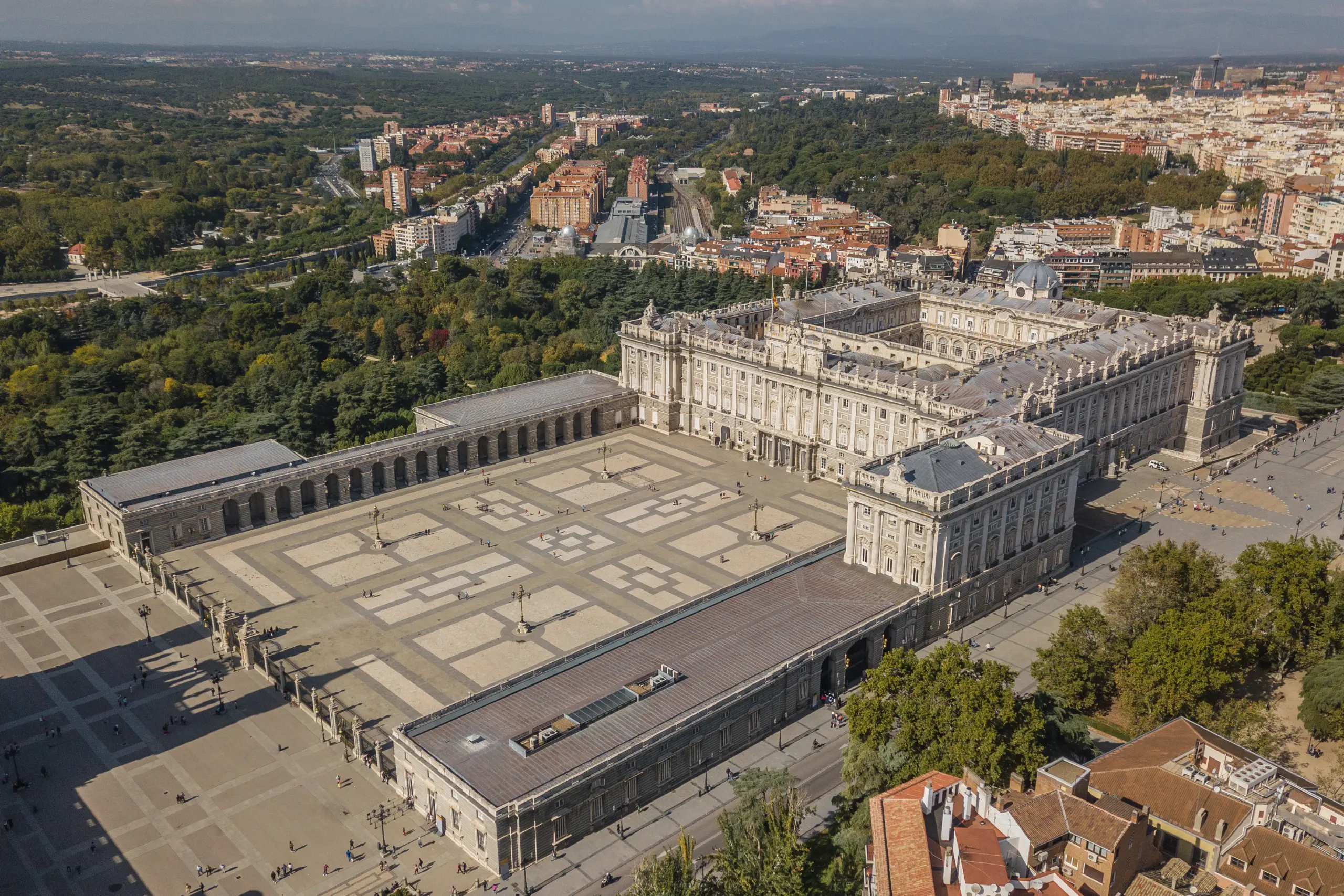
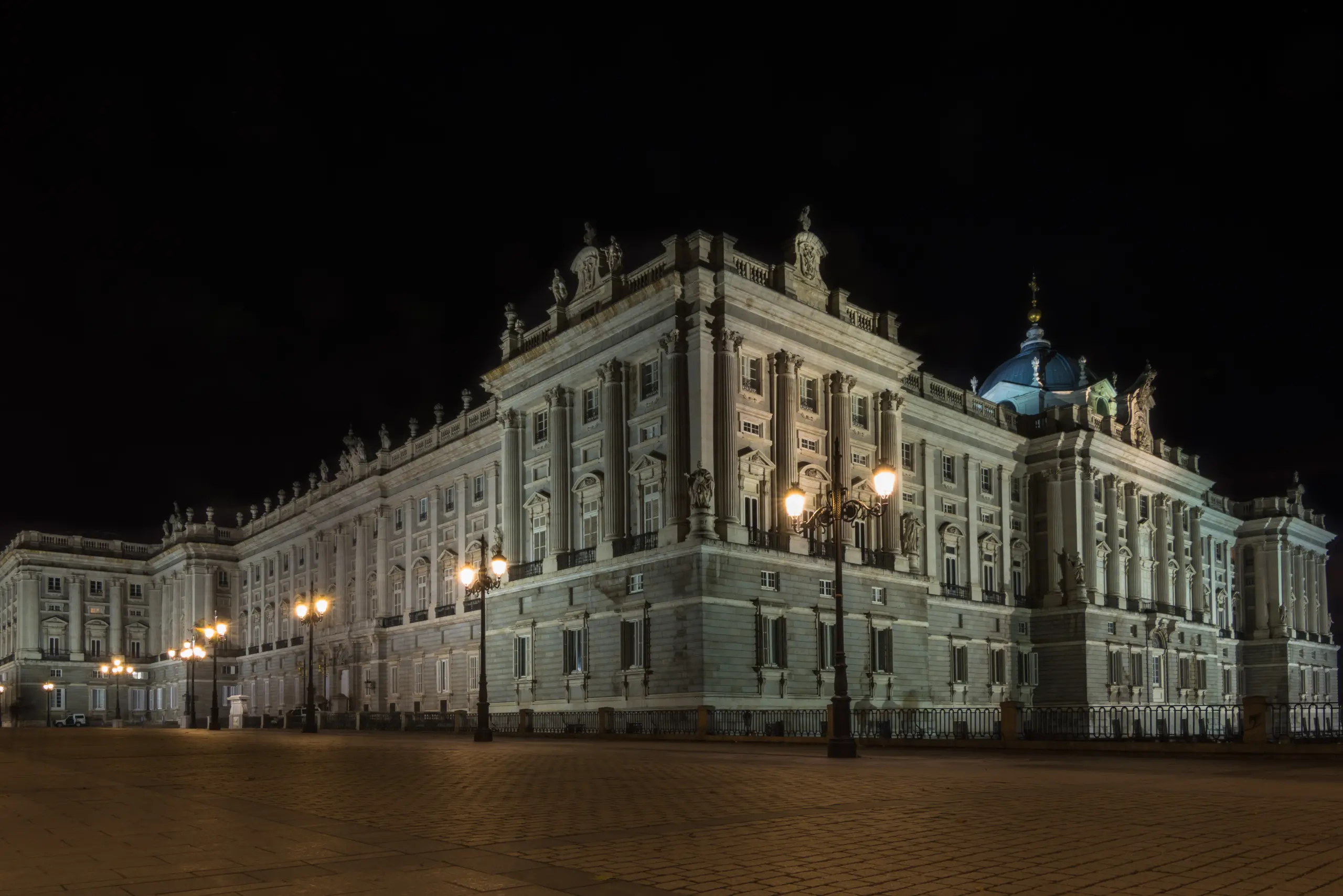
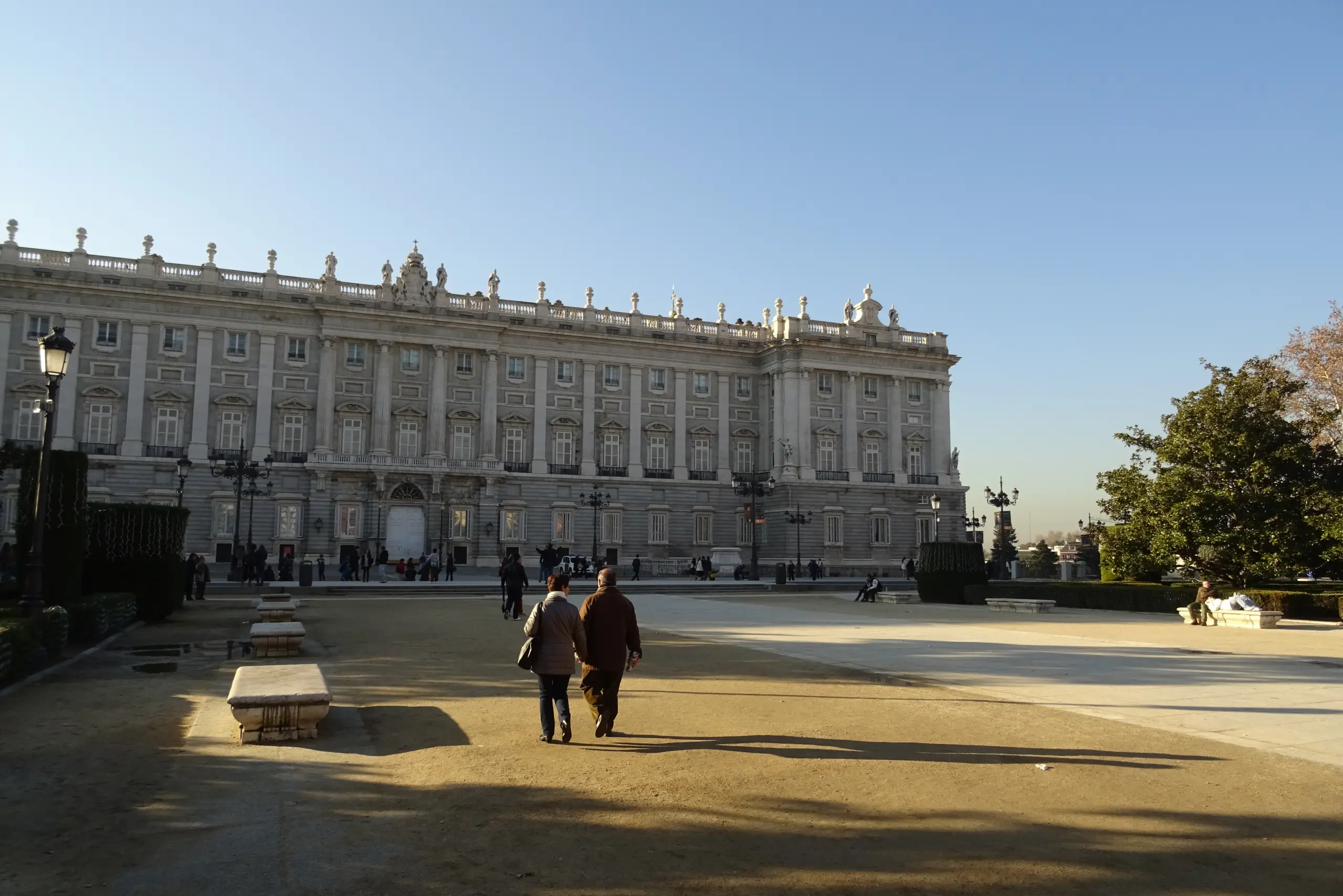
There is a moment when you stand in the Plaza de Oriente and the Royal Palace rises before you, its white façade glowing against the Madrid sky, when the scale of Spain’s royal history becomes tangible. This is not merely a palace; it is the largest royal palace in Western Europe, with 3,418 rooms built around a courtyard of arms. And yet its true power lies not in its size, but in the stories it holds within its walls — of the fire that destroyed its predecessor, of the Bourbons who built it, and of the kings and queens who shaped Spain from within these rooms.
From fortress to palace
The palace rises on the site of a ninth-century Muslim fortress, later rebuilt as the Alcázar of Madrid, the royal residence of the Habsburgs. On Christmas Eve of 1734, a fire destroyed the old Alcázar completely, and Philip V ordered a new palace built in its place — one of stone and brick that could never burn. Completed in 1755, the new Royal Palace was designed by architects including Filippo Juvarra and Giovanni Battista Sacchetti in the Italian Baroque style, and Charles III became the first king to make it his home in 1764.
Halls of ceremony
Inside, the palace unfolds in a sequence of rooms that rank among the finest in Europe. The Throne Room, with its ceiling by Tiepolo and its mirrors and velvet preserved since the time of Charles III, remains the ceremonial heart of the Spanish monarchy. The Gasparini Room, a masterpiece of Rococo, the Hall of Columns, the Royal Chapel with its relics, and the Royal Armoury — one of the world’s most important collections of armour, including the harnesses of Charles V — layer century upon century of artistry.
The Royal Kitchen and the Sabatini Gardens
Beyond the grand halls, the Royal Kitchen preserves the fascinating domestic world of the palace, with its original copper cookware and preparation rooms used until the twentieth century. Outside, the Sabatini Gardens and the Campo del Moro stretch beneath the palace walls, offering perspectives of the building that most visitors never see — a quieter, green-faced palace framed by hedges and fountains.
A palace that is still alive
Today, the Royal Palace remains the official residence of the Spanish Royal Family, though they reside at the more modest Zarzuela Palace. State ceremonies, royal weddings, and official receptions are still held here, making it not a museum but a living stage of Spanish history. The changing of the guard on Wednesdays and the solemn Solemn Changing on the first Wednesday of each month are among the most memorable sights in Madrid.
None of this is immediately visible. It requires someone to point out the traces of the lost Alcázar in the palace’s foundations, to explain the symbolism of Tiepolo’s ceiling, or to place the palace within the broader narrative of Madrid as a royal capital. Without that, the site risks becoming exactly what it should not: a grand façade, photographed and forgotten.
Unica Travellers approaches the Royal Palace the way it approaches every destination: as a story to be read, a narrative to be uncovered. The palace is not the attraction. The journey through its layers is.