MEANINGFUL TRAVELLERS
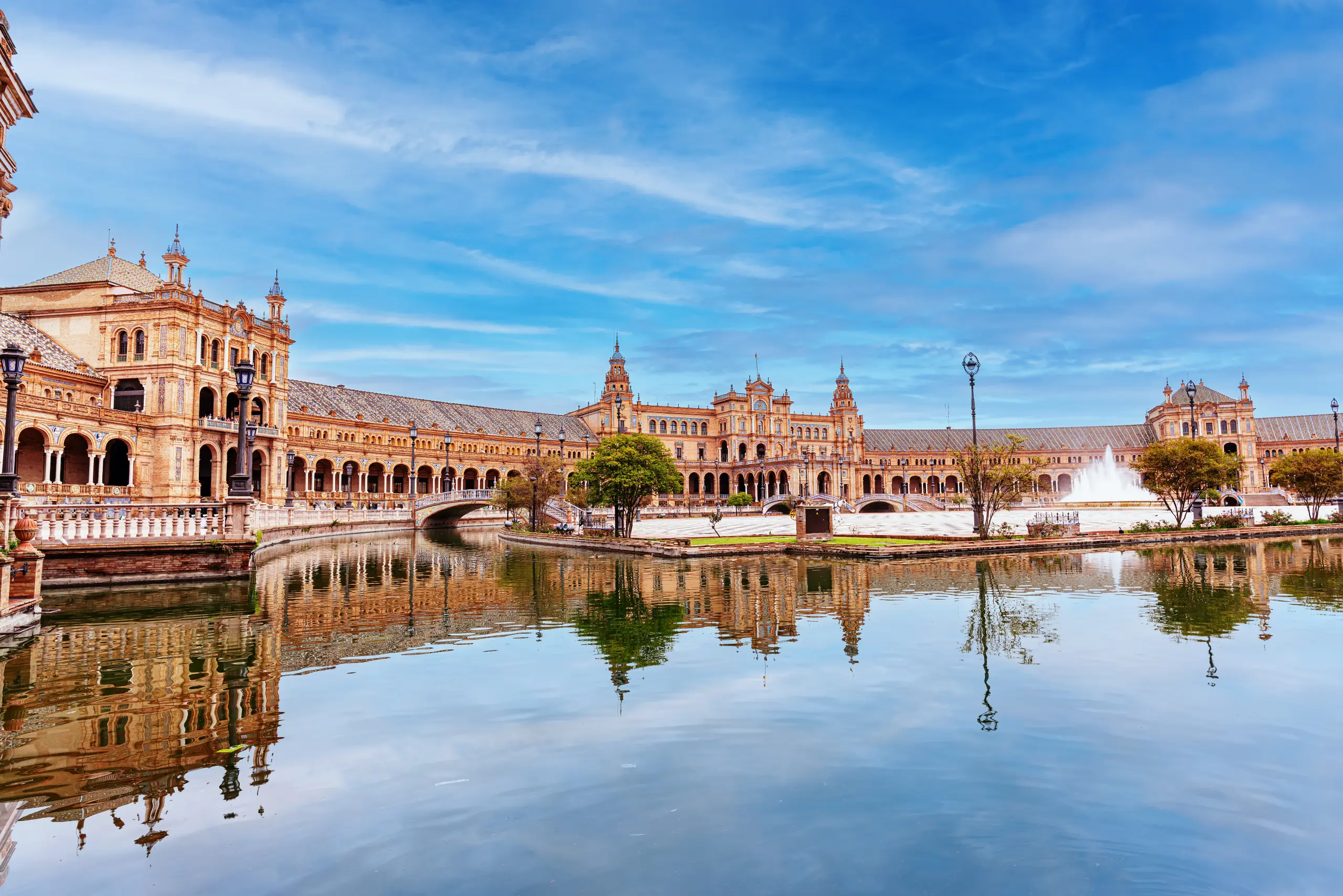
Plaza de España, Seville, Spain · A Palace of Tiles and Water
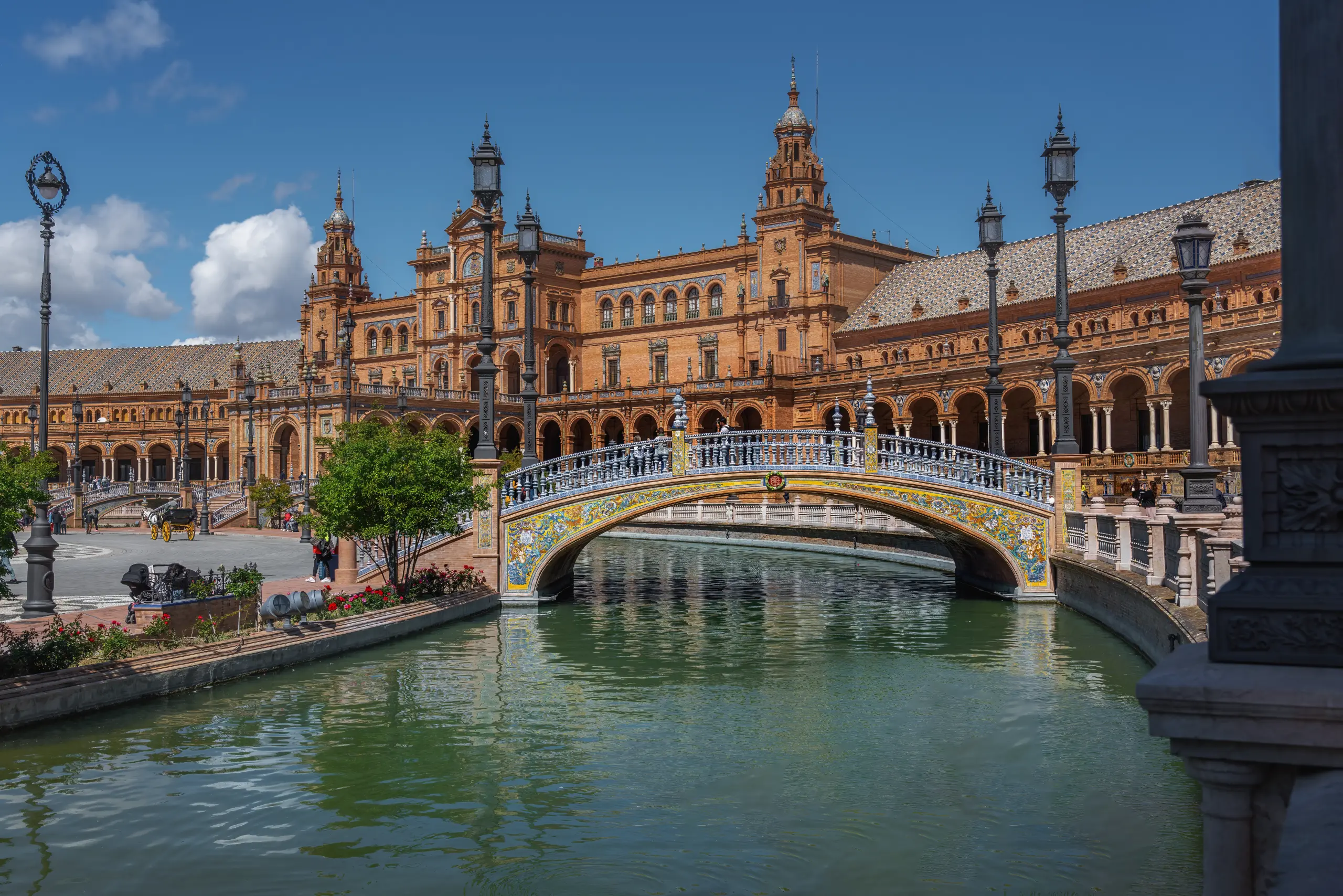
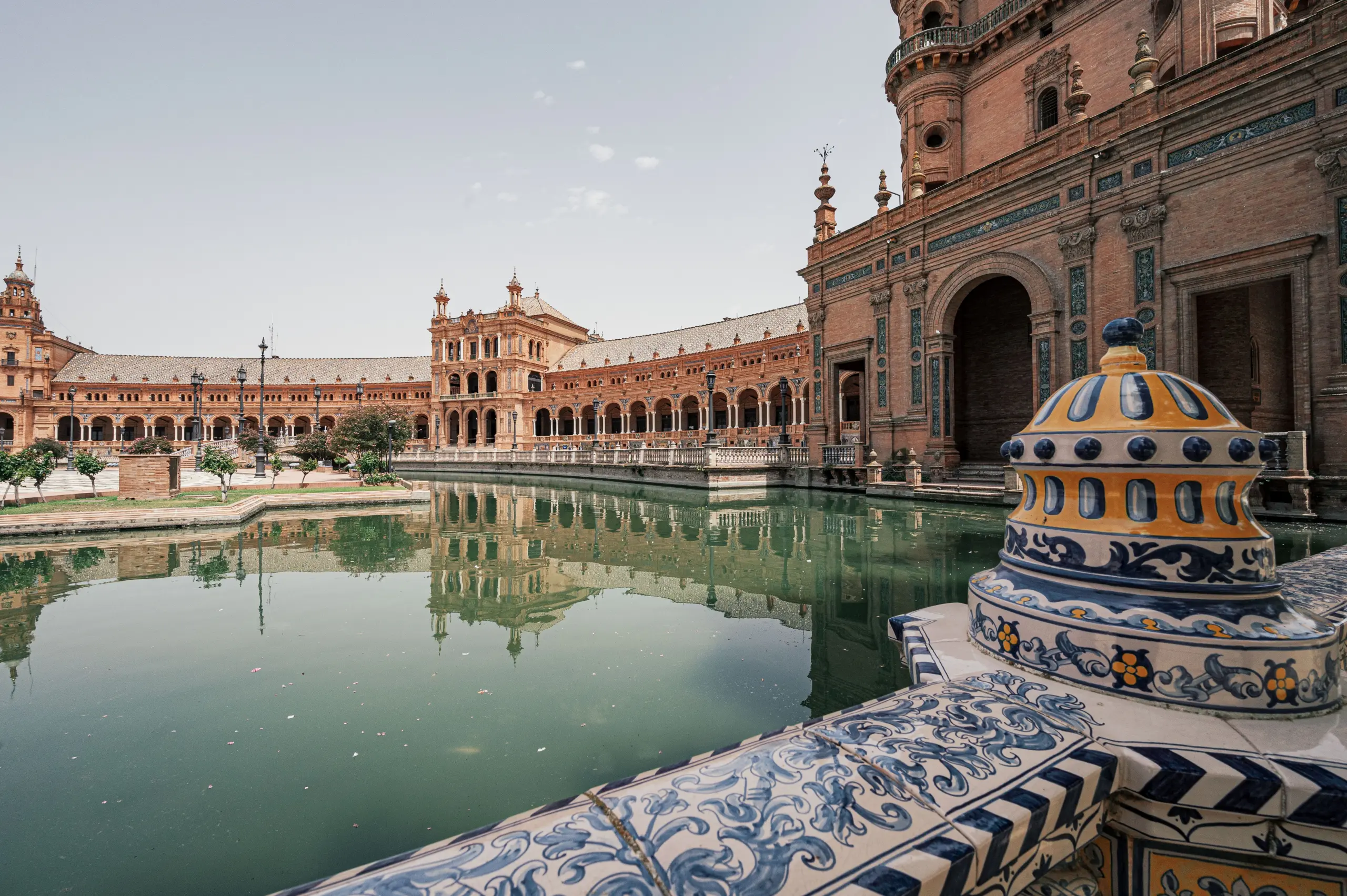
There is no square in Europe quite like Plaza de España in Seville. Built for the Ibero-American Exposition of 1929 as a semicircular palace in regionalist style, it was conceived as an embrace: the building curves around an open plaza of 50,000 square metres to symbolize Spain welcoming its former territories. Its brick walls and towers, covered in ceramics, its four bridges over a canal of rowing boats, and its ceilings of carved wood make it feel less like a square and more like a dream of Seville in glazed tiles.
A journey through the provinces
Along the base of the palace runs a corridor of 48 alcoves — one for each Spanish province — each with a tiled scene of its history and its map. Walking from alcove to alcove is a journey across the whole of Spain in a single promenade, a gallery of azulejos that has enchanted visitors for a century.
The Star Wars palace of Naboo
Cinema lovers know the square for another reason. In 2000, George Lucas chose Plaza de España to depict the royal palace of Planet Naboo in Star Wars: Episode II — Attack of the Clones. It is here that Queen Amidala, played by Natalie Portman, is made prisoner by the Empire while Anakin and Padmé walk the colonnades of the square. Few places in the world have served as both a monument of Spanish history and a palace of a galaxy far, far away.
Boats, bridges and the Maria Luisa Park
Visitors row along the canal beneath the square’s four bridges, representing the ancient kingdoms of Spain, and musicians play Spanish guitar under the arches. And all of this is just the entrance to the Parque de María Luisa, the most beautiful green heart of Seville, filled with fountains, palm groves and pavilions of the 1929 Exposition.
All of this becomes even richer in good company. A guide who knows Seville can reveal the meaning of each province’s alcove, the history of the 1929 Exposition that reshaped the city, and the stories behind one of the most filmed squares in Europe. Every glance then becomes a page — a story that is a joy to read.
Unica Travellers approaches Plaza de España the way it approaches every destination: with curiosity, delight, and the time to let a place reveal itself. The square enchants on its own; the journey through its layers makes it unforgettable.