MEANINGFUL TRAVELLERS
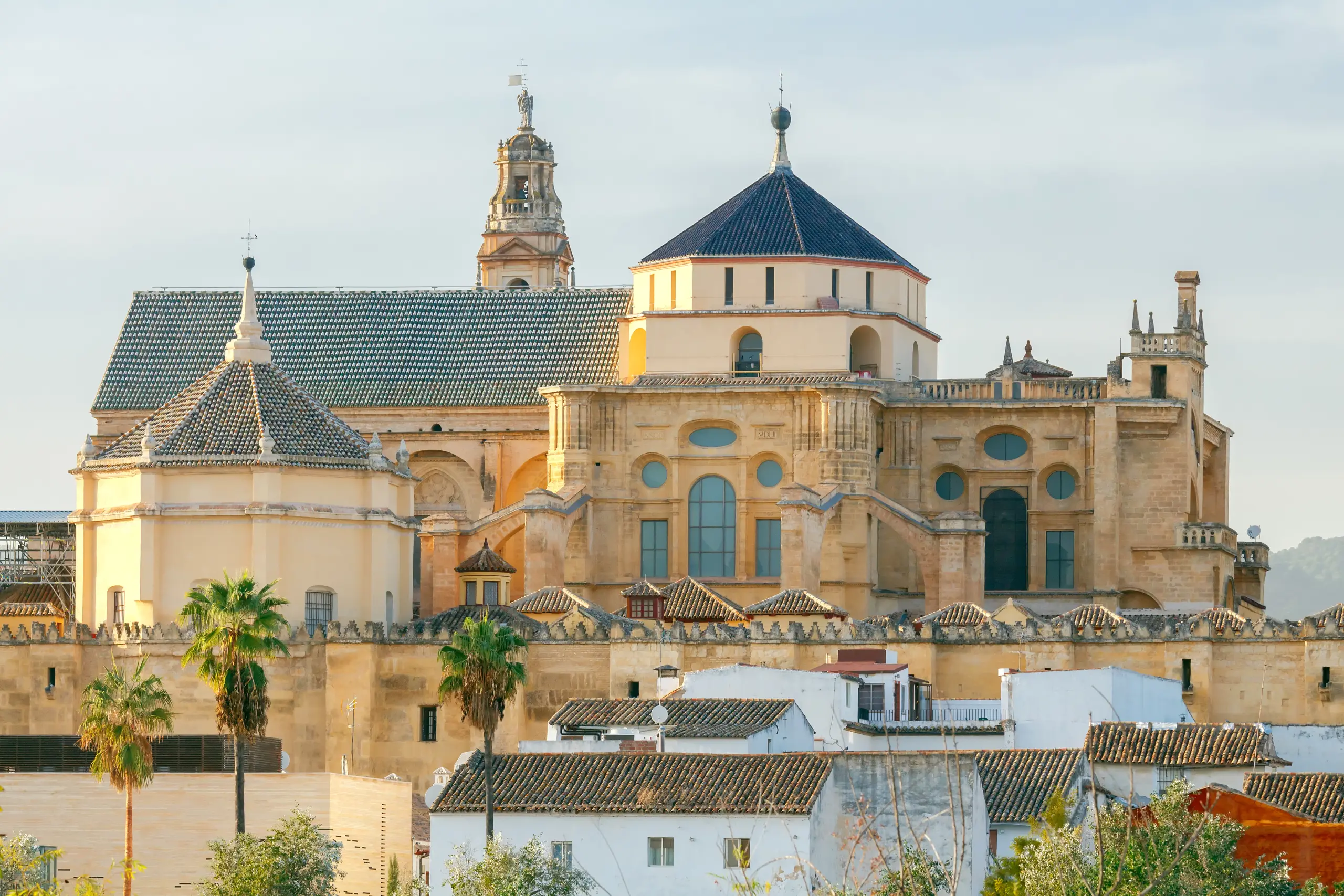
Mosque Cathedral of Córdoba, Spain · The Forest of Arches
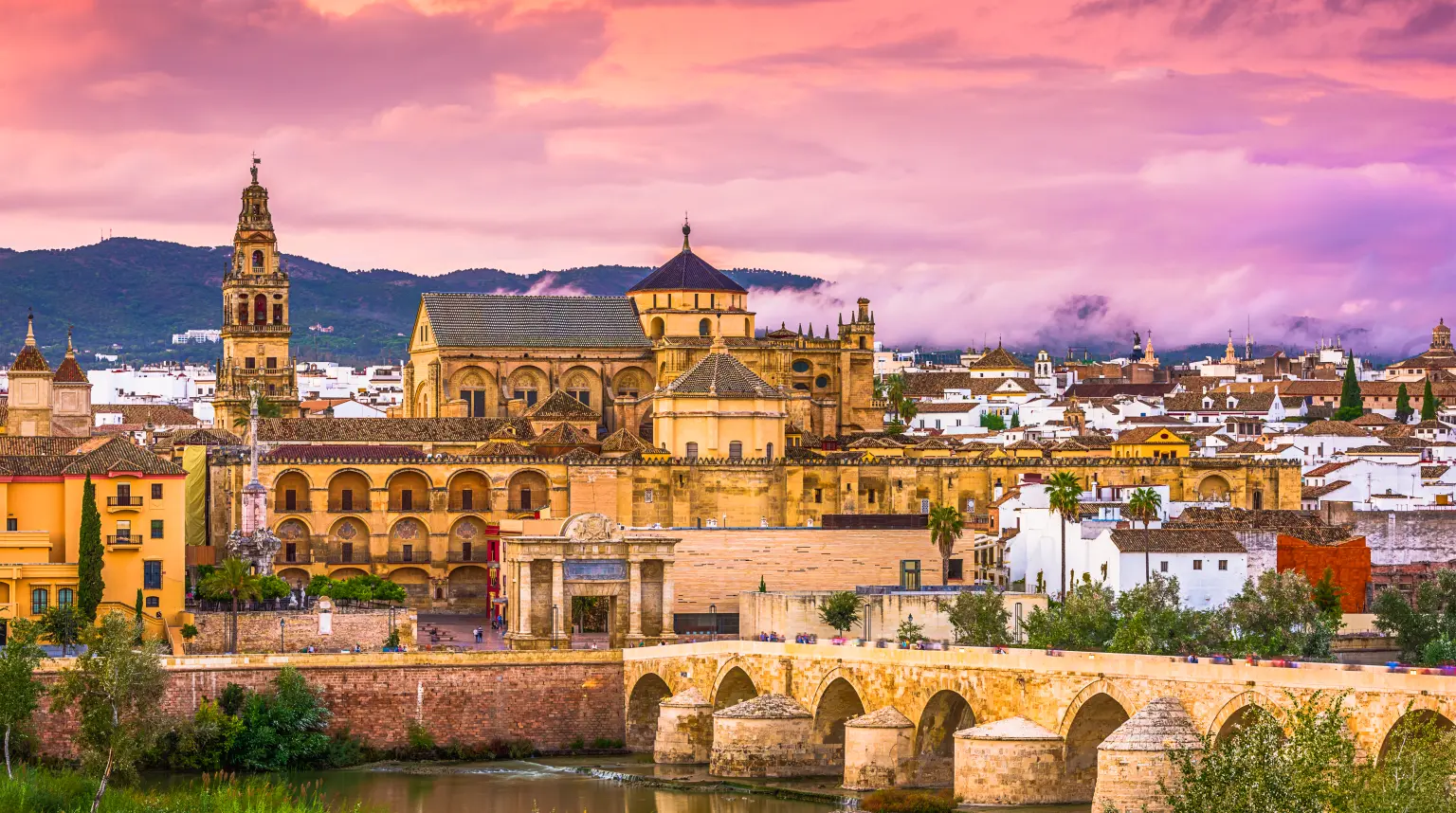
There is a moment, just inside the Door of the Palms, when the Mosque of Córdoba opens before you: eight hundred and fifty-six columns of jasper, marble, and granite, from which double arches of stone and brick repeat into the distance like a reflection in a hall of mirrors. Few buildings in the world dissolve the sense of space so completely. This is the greatest monument of al-Andalus and one of the most extraordinary sacred buildings on Earth — a mosque that became a cathedral without ever quite ceasing to be itself.
A century of expansion
Construction began in 785 under Abd al-Rahman I, on the site of the Visigothic basilica of San Vicente, and each ruler who followed enlarged the hall: Abd al-Rahman II, Muhammad I, al-Mansur, until the mosque covered twenty-three thousand square metres. The expansion of al-Hakam II in the tenth century brought the Mosque its masterpieces — the Mihrab, with its Byzantine mosaics of gold leaf sent by the Byzantine emperor himself, the Maqsura with its intersecting arches, and the Villaviciosa dome.
The cathedral within
After the Christian conquest of 1236, the mosque was consecrated as a cathedral, and for three centuries the two faiths shared the space. In the sixteenth century, Charles V authorised the construction of a Renaissance nave in the very centre of the hall — a decision he later famously regretted. Yet the result is unlike anything else in the world: a Plateresque cathedral rising amid the forest of arches, its choir and high altar surrounded on every side by the geometry of the caliphs.
The Court of Oranges
Before entering the hall, the visitor crosses the Patio de los Naranjos, the mosque’s courtyard of orange trees, where the fountains still perform the ritual ablutions they have performed for twelve centuries. From the courtyard, the Bell Tower — the renaissance shell built over the minaret by Hernán Ruiz — rises above the old Islamic wall. At dusk, when the swallows return to the courtyard and the bells sound, the Mosque delivers one of the most atmospheric moments in Europe.
All of this becomes even richer in good company. A guide who knows the Mosque can explain how the builders reused Roman and Visigothic columns, reveal the original orientation of the qibla, and connect the Mihrab’s mosaics to Byzantium and Córdoba to Damascus. Every arch then becomes a page — a story that is a joy to read.
Unica Travellers approaches the Mosque the way it approaches every destination: with curiosity, delight, and the time to let a place reveal itself. The building enchants on its own; the journey through its layers makes it unforgettable.