MEANINGFUL TRAVELLERS
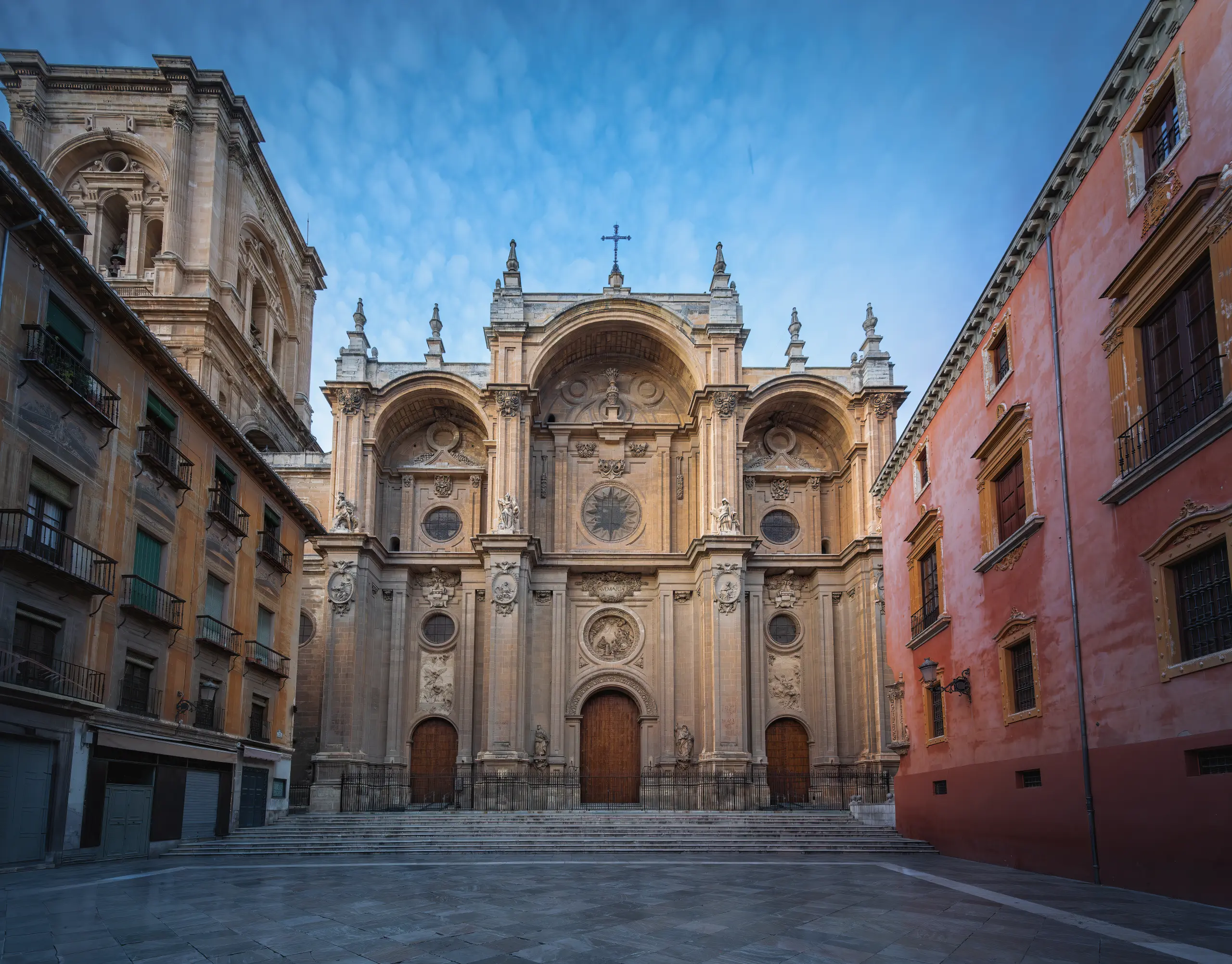
Granada Cathedral, Granada, Spain · Light and Proportion in Stone
When the Catholic Monarchs decided to raise a great cathedral in the city they had conquered, they chose the site of the former Great Mosque of Granada, in the heart of the Muslim medina. Begun in 1523, the Cathedral of Granada became the first great Renaissance church of Andalusia and one of the most influential buildings of sixteenth-century Spain: a monumental statement of the new era rising beside the Alhambra it faced.
The rotunda of Diego de Siloé
Architect Diego de Siloé conceived a plan of extraordinary audacity: a grand rotunda around the high altar, surrounded by a ring of columns and flooded with light from immense windows. Instead of the dark, vertical spaces of Gothic churches, the Cathedral of Granada offers serenity, symmetry and luminosity — a design so admired that it shaped cathedral architecture throughout Spanish America.
Facades, chapels and treasures
The main facade on the Gran Vía is the largest of its kind in Spain, a monumental canvas of carved stone facing the axis of the modern city. Inside, the chapels hold works by Alonso Cano, the great sculptor and painter of Granada’s baroque, along with silverwork, painting and the tomb of the Gonzalo Fernández de Córdoba, the Great Captain, in its own chapel.
Beside the Alhambra
The genius of Granada is that its two great monuments face each other across history: the Alhambra of the Nasrid sultans on its hill, and the Cathedral of the Christian kingdom in the plain. To visit both in one day — from the plasterwork of the palaces to the light of Siloé’s rotunda — is to read the full story of the city in a single walk.
All of this becomes even richer in good company. A guide who knows Granada can explain the audacity of Siloé’s plan, the artistry of Alonso Cano and the ambition of the century that built this church. Every stone then becomes a page — a story that is a joy to read.
Unica Travellers approaches Granada Cathedral the way it approaches every destination: with curiosity, delight, and the time to let a place reveal itself. The building enchants on its own; the journey through its light makes it unforgettable.