MEANINGFUL TRAVELLERS
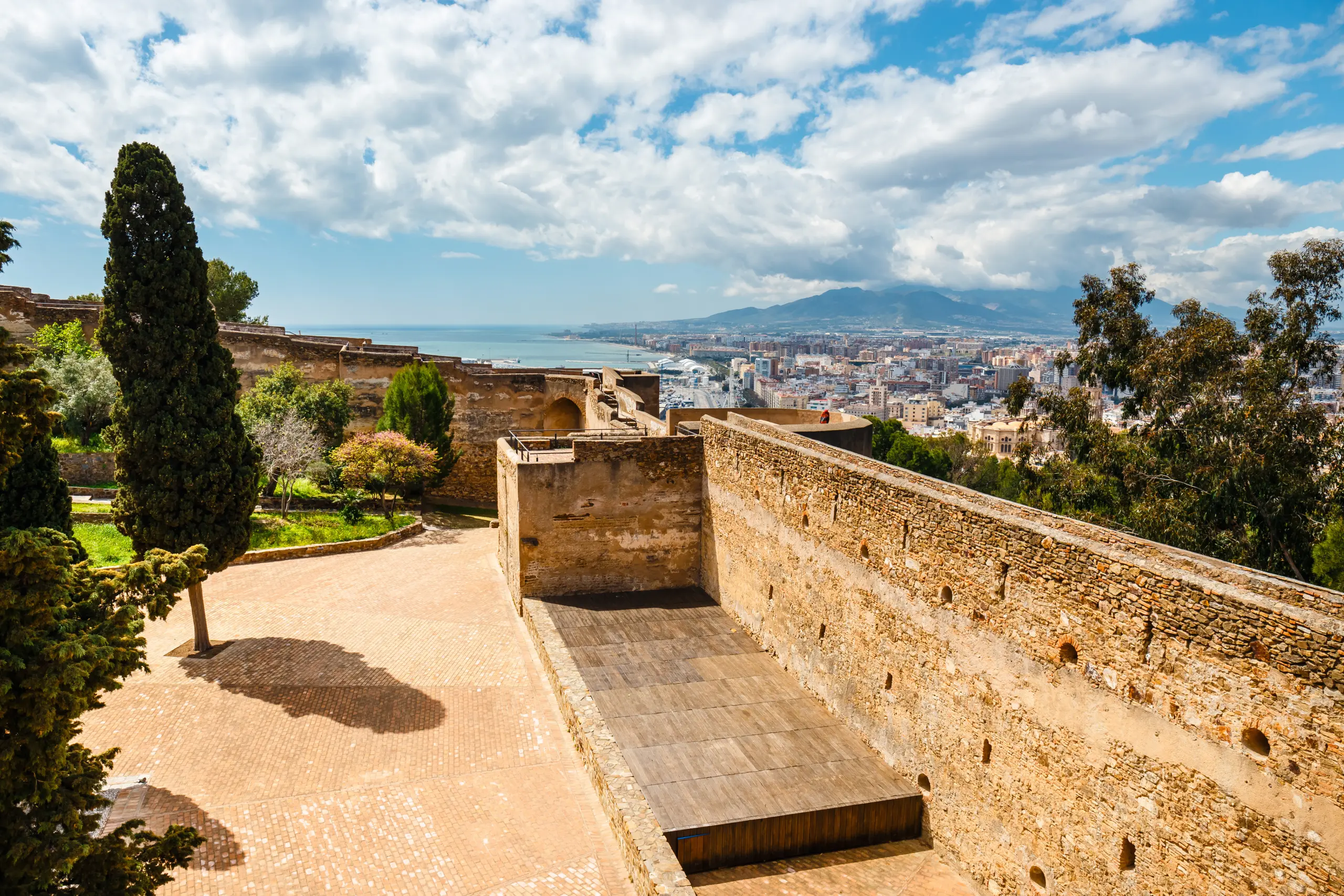
Alcazaba of Málaga, Spain · The Citadel by the Sea
There is a moment when you climb the last staircase of the Alcazaba of Málaga, cross a vaulted passage, and the whole bay of Málaga opens beneath you — the port, the Mediterranean, the bullring, and two thousand years of city history stacked at your feet. This is the best-preserved Moorish fortress in all of Spain, and it wears its beauty lightly: a palace-fortress of fountains, arches, and gardens that the poets of al-Andalus called the favourite place of the kings of Málaga.
Two empires, one hill
The Alcazaba was begun in the eleventh century by the Ziri Berber dynasty and later enlarged by the Nasrids, the same dynasty that built the Alhambra. Its walls rise directly over the Roman Theatre of Málaga, built in the first century under Emperor Augustus — a collision of civilisations so literal that the theatre’s columns were reused in the fortress above it. At its side, the corridor of arches climbs the hill to the Castle of Gibralfaro, forming one of the most distinctive fortified skylines in Europe.
The palace of the Taifas
Inside, the Alcazaba unfolds as a sequence of Nasrid courtyards and halls that rival Granada in miniature: the Patio de la Alberca with its reflecting pool, the Arches of Granada’s Gate, the Cuartos de Granada with their carved stucco and wooden ceilings. Water is everywhere — in channels, fountains, and pools — cooling the courtyards and doubling the architecture in reflection. It is a lesson in how the builders of al-Andalus turned fortress architecture into poetry.
Defence in three rings
Yet the Alcazaba never stopped being a fortress. Its design is a textbook of medieval military engineering: three concentric walls, machicolations, staggered gates to break any assault, and a hydraulics system of wells and cisterns that allowed it to withstand sieges. Little wonder that it held out longer than almost any fortress in Iberia — and that after the Christian conquest in 1487, the Catholic Monarchs chose to lodge within its walls.
All of this becomes even richer in good company. A guide who knows the Alcazaba can point out the Roman column drums inside the Moorish arches, explain how the fortress communicated with Gibralfaro, and connect its courtyards to the wider story of al-Andalus after the fall of Córdoba. Every gate then becomes a page — a story that is a joy to read.
Unica Travellers approaches the Alcazaba the way it approaches every destination: with curiosity, delight, and the time to let a place reveal itself. The fortress enchants on its own; the journey through its layers makes it unforgettable.