MEANINGFUL TRAVELLERS
The Alhambra, Granada, Spain · A Fortress of Poetry in Plaster and Water
Rising on the red hill of Sabika above Granada, the Alhambra is the most complete royal city of the Islamic West to survive into our time. For more than two centuries it was the seat of the Nasrid emirs, the last Muslim dynasty of Europe, and their builders created here an architecture without equal: a fortress of towers and walls enclosing a sequence of palaces where water, light and inscription are woven into spaces of astonishing refinement. It is the most visited monument of Spain and one of the essential experiences of any journey through Europe.
The Nasrid Palaces: the summit of Islamic art
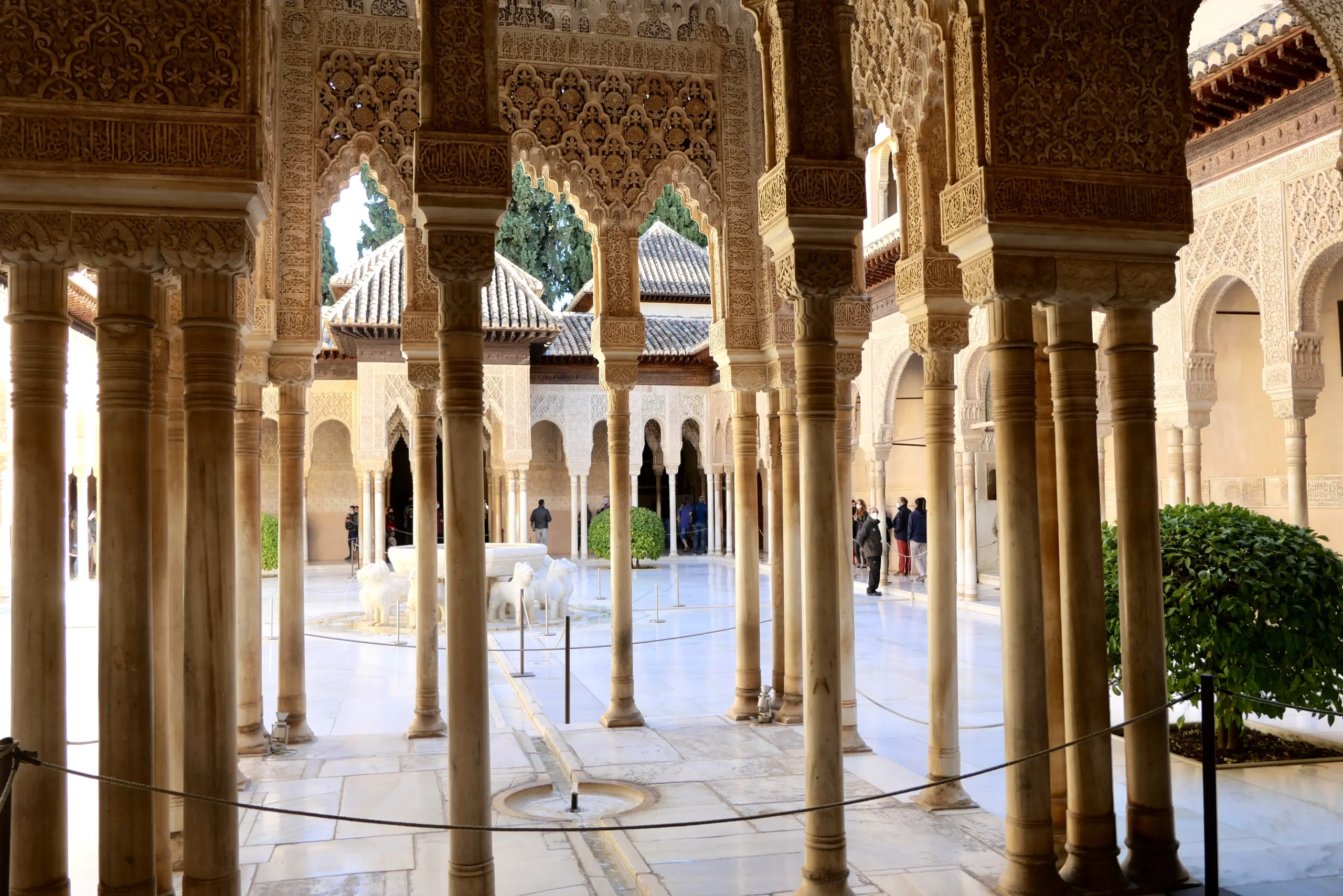
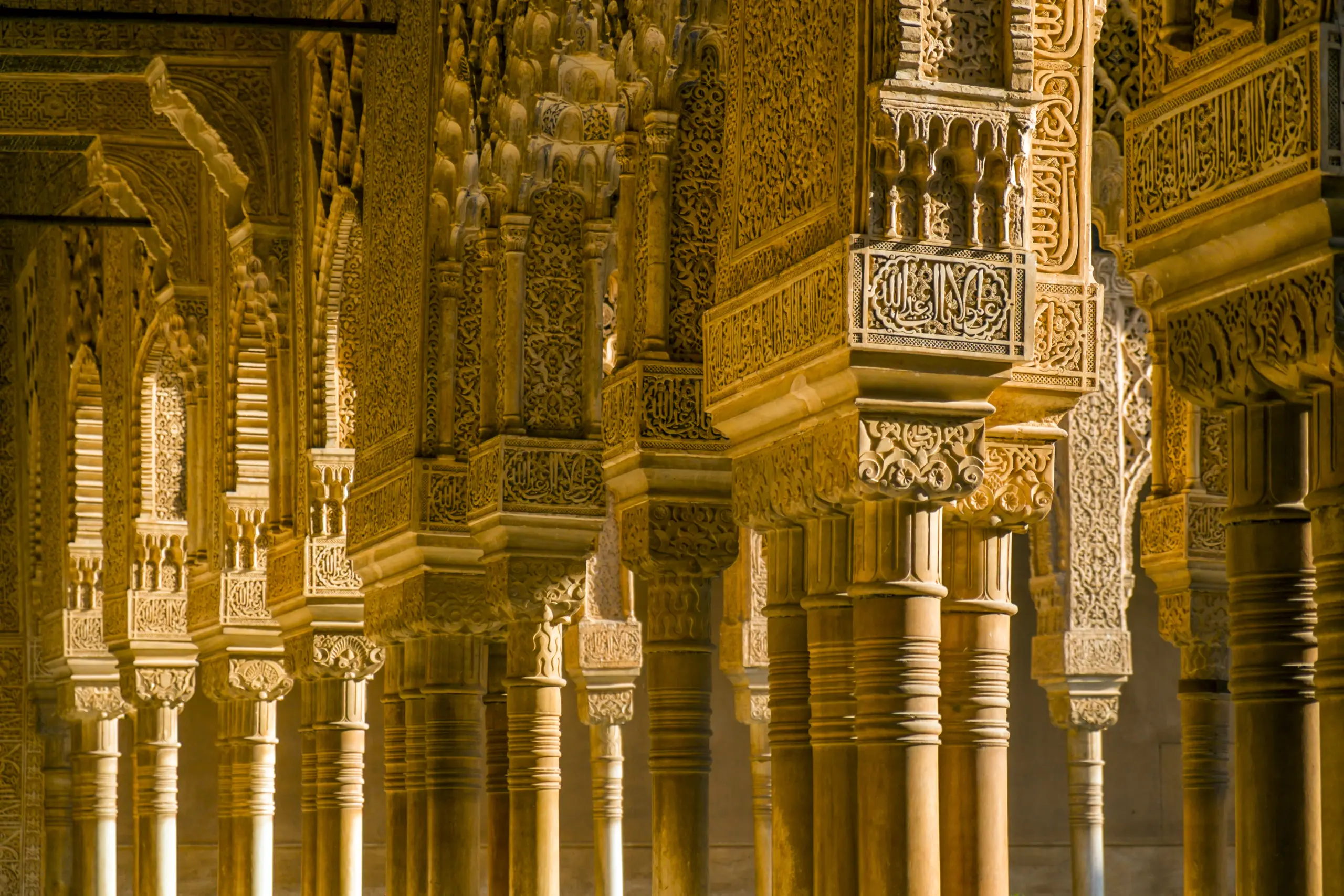
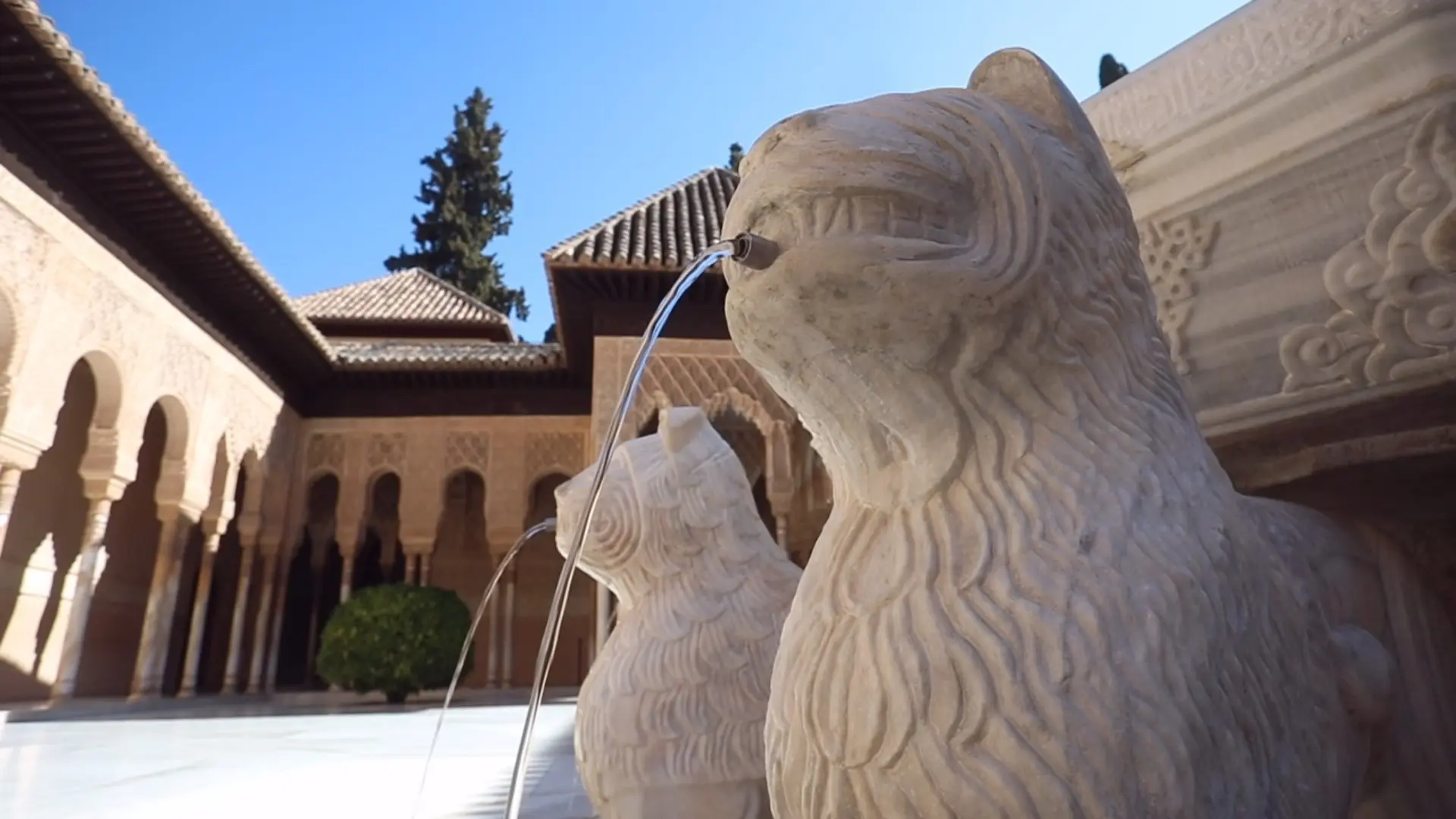
Within the royal complex, each palace is a world. The Mexuar was the hall of justice and administration; the Comares Palace centres on the Court of the Myrtles, whose still pool mirrors the tallest tower of the Alhambra and reflects the Hall of the Ambassadors, the throne room where Sultan Yusuf I and his court received envoys beneath a ceiling representing the seven heavens of Paradise. And beyond waits the Court of the Lions: twelve marble lions bearing a fountain, ringed by slender columns and filigree archs — the most celebrated courtyard of the Islamic world, where every surface carries poetry carved into stucco.
The Alcazaba and the city on the hill
The oldest part of the complex is the Alcazaba, the military fortress crowned by the Tower of the Vela, whose bell marked the hours and the irrigation of the plain for centuries. From its ramparts opens the view over the whole city: the Albaicín quarter cascading down the opposite hill, the gardens of the Partal with their pavilion above the wall, and beyond them the towers of the palaces against the snows of the Sierra Nevada.
Charles V and the palace within the palace
When the Catholic Monarchs took Granada in 1492, they did not destroy the Alhambra; they inhabited it. The Emperor Charles V raised within the fortress a circular Renaissance palace of austere stone — one of the finest buildings of the Spanish Renaissance and the home of the Museum of the Alhambra — creating an extraordinary dialogue between two architectures, two faiths and two conceptions of beauty that is unique in the world.
All of this becomes even richer in good company. A guide who knows the Alhambra can read the poems inscribed on its walls, reveal the hydraulic genius that moves its waters, and bring the sultans and their court back into each hall. Every courtyard then becomes a page — a story that is a joy to read.
Unica Travellers approaches the Alhambra the way it approaches every destination: with curiosity, delight, and the time to let a place reveal itself. The palace enchants on its own; the journey through its poetry makes it unforgettable.